Rafale vs JF-17 Thunder: Combat Capability Review
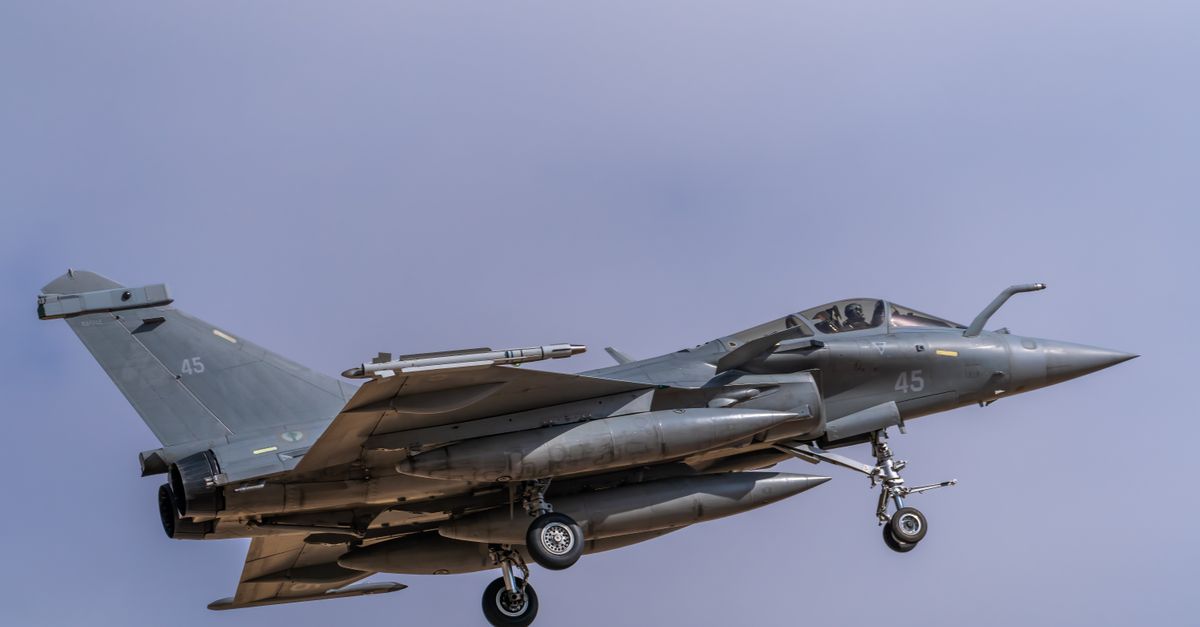
When people ask which jet wins in a best fighter jet India vs Pakistan review, the honest answer is that the Rafale and JF-17 Thunder were built for different wars. The Rafale is a twin-engine, high-end multirole fighter that India bought for deep strike, air superiority, and nuclear delivery. The JF-17 is a single-engine, low-cost workhorse that Pakistan operates in large numbers for air defense and standoff attack. In a one-on-one duel, the Rafale holds most of the cards. In a sustained campaign, the JF-17's numbers and cost per flight hour keep it relevant. This review breaks down what actually matters: radar, missiles, range, electronic warfare, and how each jet fits into its air force's strategy.
Rafale vs JF-17: The Short Answer
The Rafale is the more capable fighter in almost every measurable category. It has a larger AESA radar, longer range, heavier payload, better electronic warfare, and a wider mix of proven weapons. The JF-17 Block III narrows the gap with an AESA radar and PL-15-class missiles, but it remains a lighter, cheaper aircraft. If the question is 'which jet would I want in a high-intensity air battle,' the Rafale wins. If the question is 'which jet can Pakistan afford to buy, fly, and lose in numbers,' the JF-17 wins. That is why a best fighter jet India vs Pakistan review has to look at the ecosystem, not just the airframe.
Airframe and Flight Performance
The Rafale uses a delta-canard layout with two Snecma M88 engines, each producing around 75 kN with afterburner. It can pull 9G, supercruise briefly with a light load, and land on carriers. The JF-17 is a conventional single-engine design with a RD-93 or WS-13 engine producing about 49 kN dry and 84 kN with afterburner. It is lighter, cheaper to maintain, and can operate from short runways. But the Rafale's twin-engine redundancy and higher thrust-to-weight give it an edge in sustained turns and acceleration. In a close-range dogfight, the Rafale's energy retention and helmet-mounted sight make it the favorite. The JF-17 is no slouch, but it was never designed to out-turn a twin-engine delta canard.
Radar and Avionics: AESA vs AESA
Both jets now offer AESA radars, but they are not equal. The Rafale's RBE2-AA has roughly 1,000 transmit-receive modules and a detection range of around 160 km for a 3 m² target. The JF-17 Block III uses the KLJ-7A, a smaller AESA with fewer modules and a detection range closer to 120 km. The Rafale also carries the SPECTRA electronic warfare suite, which can detect, jam, and decoy threats automatically. The JF-17 relies on a simpler self-protection suite, often with a Chinese-made jammer pod. In a best fighter jet India vs Pakistan review, avionics is where the Rafale pulls ahead. It sees farther, jams better, and shares data more seamlessly with AWACS and other Rafales.
Weapons and Combat Load
The Rafale can carry up to 9.5 tonnes of ordnance on 14 hardpoints. Its main air-to-air weapons are the Meteor beyond-visual-range missile and the MICA IR/EM. The Meteor is a game-changer: its ramjet motor gives it a no-escape zone roughly three times larger than conventional rockets. The JF-17 typically carries four to six air-to-air missiles, including the PL-5E II, PL-10, and PL-15E. The PL-15E is a strong BVRAAM, but it lacks the Meteor's sustained thrust. For ground attack, the Rafale can deploy SCALP cruise missiles and AASM Hammer bombs. The JF-17 uses C-802 anti-ship missiles, RA'AD cruise missiles, and laser-guided bombs. The Rafale's payload and weapon variety make it the more flexible strike platform.
Range, Endurance, and Logistics
The Rafale has a combat radius of about 1,850 km with three drop tanks and six AAMs. The JF-17's radius is closer to 1,200 km with similar tanks. That matters in a country as large as India or Pakistan, where targets can be far from the border. The Rafale can also refuel from India's Il-78 tankers, extending its reach further. The JF-17 can refuel from Pakistan's Il-78s, but its smaller fuel fraction means more tanker sorties. On logistics, the JF-17 wins on cost. It burns less fuel, needs fewer spare parts, and costs about $25 million per unit compared to the Rafale's $90–120 million. Pakistan can buy four JF-17s for the price of one Rafale. That is not a small thing in a war of attrition.
Cost, Numbers, and Strategic Fit
India has ordered 36 Rafales, with talks for 26 more. Pakistan operates around 150 JF-17s and plans to build more. The Rafale is a silver bullet: few in number, but lethal and survivable. The JF-17 is a volume fighter: cheap enough to swarm, modern enough to threaten. In a best fighter jet India vs Pakistan review, you cannot ignore that Pakistan's entire fighter fleet is built around the JF-17 and F-16, while India's is a mix of Rafale, Su-30MKI, MiG-29, and Tejas. The Rafale gives India a qualitative edge in any skirmish. The JF-17 gives Pakistan the ability to absorb losses and keep fighting. Which matters more depends on how long the war lasts.
Frequently asked questions
Is the Rafale better than the JF-17 Thunder?
Yes, in raw capability. The Rafale has a better radar, longer range, heavier payload, and the Meteor missile. The JF-17 is cheaper and easier to maintain, but it would be outmatched in a one-on-one engagement.
Can the JF-17 Block III beat a Rafale?
In a close-range fight, maybe, if the JF-17 gets the first shot with a PL-10. But in beyond-visual-range combat, the Rafale's Meteor and SPECTRA give it a decisive advantage. The JF-17 would need heavy support from AWACS and jammers to win.
How many Rafales does India have vs JF-17s in Pakistan?
India has 36 Rafales in service, with more on order. Pakistan has around 150 JF-17s of all blocks. The numbers favor Pakistan, but the Rafale is far more capable per unit.
Which jet is cheaper to operate, Rafale or JF-17?
The JF-17 is much cheaper. Its flyaway cost is about $25 million, and its hourly operating cost is a fraction of the Rafale's. The Rafale costs $90–120 million per unit and requires more maintenance.
What is the best fighter jet in India vs Pakistan?
The Rafale is the best fighter jet in the India-Pakistan context for high-end combat. The JF-17 is the best value for Pakistan. If you want a single answer for a best fighter jet India vs Pakistan review, the Rafale wins on capability, but the JF-17 wins on affordability and numbers.