India vs Pakistan Air Force: Which Fleet Wins?
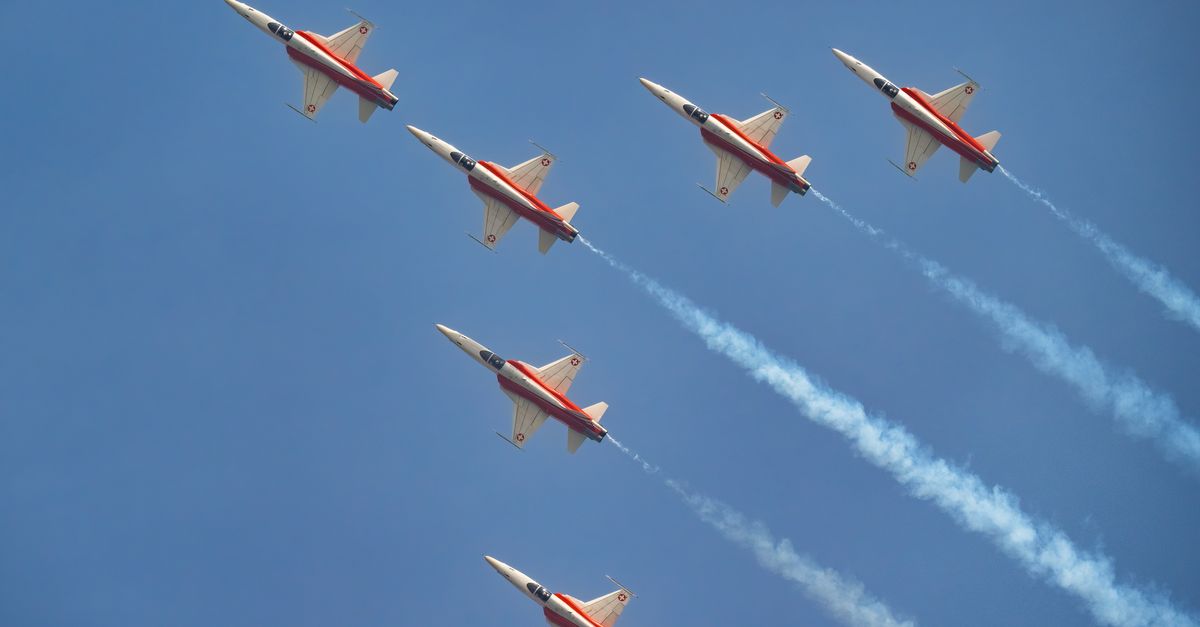
On paper, the Indian Air Force (IAF) holds a clear upper hand in overall size, payload capacity, and fleet diversity over the Pakistan Air Force (PAF). India operates roughly 600 combat aircraft against Pakistan's tally of around 400. Yet in modern aerial warfare, numbers alone rarely settle the contest. When you compare india vs pakistan air force fighter jets, the real story sits in tactical deployment, missile engagement envelopes, airborne early warning integration, and pilot flight hours.
The short answer: India wins the war of attrition, strategic reach, and high-end platform firepower through assets like the Dassault Rafale and Su-30MKI. However, Pakistan holds a finely tuned defensive edge along its immediate borders, utilizing a well-integrated mix of F-16s, J-10C Vigorous Dragons, and JF-17 Block IIIs wired into modern airborne battle management networks. Here is how both fleets actually stack up when pitted against one another.
Fleet Size and Composition: Raw Mass vs. Focused Defense
The IAF operates approximately 30 to 31 active fighter squadrons against a sanctioned strength of 42. This deficit remains New Delhi’s biggest headache. Even so, the sheer volume of Indian combat aircraft dwarf the PAF. India’s inventory leans heavily on twin-engine air superiority fighters, primarily over 260 Sukhoi Su-30MKIs, backed by 36 Dassault Rafales, around 50 upgraded Mirage 2000s, over 60 MiG-29s, indigenous Tejas Mk1s, and a shrinking force of legacy MiG-21 Bisons.
Pakistan takes a radically different operational approach. Constrained by a tighter defense budget, the PAF organizes roughly 20 combat squadrons designed almost entirely for rapid defensive scrambles and localized air superiority against India. The backbone consists of around 75 to 85 General Dynamics F-16 Fighting Falcons (including Block 52 variants), over 150 CAC/PAC JF-17 Thunders across Blocks I, II, and III, approximately 20 to 25 newly inducted Chengdu J-10C multirole fighters, alongside aging Mirage III and Mirage 5 platforms reserved largely for maritime strike and tactical ground attack.
In an extended campaign, India's industrial depth and massive airframe pool allow it to soak up losses that would break the PAF. But in a fast-burning border conflict lasting four to six days, raw fleet totals matter far less than immediate availability and response times.
Top-Tier Matchups: Rafale and Su-30MKI vs. F-16 and J-10C
Analyzing india vs pakistan air force fighter jets requires looking closely at the top-tier fighters each side scrambles for frontline air control.
Dassault Rafale vs. Chengdu J-10CE
The Rafale is India’s sharpest spear. Featuring the Thales RBE2 Active Electronically Scanned Array (AESA) radar, the SPECTRA electronic warfare suite, and front-sector optronics (FSO), the omnirole French jet gives pilots exceptional situational awareness while maintaining low radar cross-section characteristics.
Pakistan countered India’s Rafale buy by procuring China's J-10CE. The J-10C features an advanced indigenous AESA radar, an infra-red search and track (IRST) system, and low-observable shaping. While the Rafale boasts higher internal payload margins and superior electronic countermeasures via SPECTRA, the J-10CE is a dangerous, agile competitor specifically tailored to contest medium-to-high altitude intercepts.
Su-30MKI vs. F-16 Fighting Falcon
The Su-30MKI remains the IAF’s backbone. It is a massive, thrust-vectoring twin-engine beast with an enormous operational radius, an 8,000 kg weapons payload, and the NIIP N011M Bars passive electronically scanned array (PESA) radar. It is built to carry heavy standoff weapons, dominate large swathes of airspace, and loiter for hours.
Pakistan’s F-16s—specifically the modernized Block 52s equipped with the APG-68(v)9 radar—rely on superior maneuverability, ergonomic cockpit architecture, and combat-proven Link-16 tactical data exchange. While the Su-30MKI out-ranges and out-carries the F-16, the Falcon carries a smaller radar cross-section and historically boasts exceptional PAF pilot mission training.
Beyond-Visual-Range (BVR) Missiles: Meteor, PL-15, and AMRAAM
The balance of modern air combat across the subcontinent hinges not on dogfights, but on missile engagement zones (MEZ). In the air battle over Kashmir in February 2019, the PAF held a temporary tactical range advantage with the American AIM-120C-5 AMRAAM (roughly 100 km range) over India's older Russian R-77 and French Super 530D missiles.
That dynamic has evolved rapidly across both sides:
- Meteor (India): Carried by the IAF Rafale, the ramjet-powered Meteor is widely recognized as the premier BVR missile in operational service today. Because its ramjet motor can throttle during flight rather than burning solid propellant in an initial burst, the Meteor retains enormous kinetic energy at terminal ranges, yielding a "no-escape zone" estimated between 60 and 80 km, with an overall range exceeding 150 km.
- PL-15 (Pakistan): Outfitting the PAF's J-10CE and JF-17 Block III, the dual-pulse rocket-motor PL-15 carries an integrated active radar seeker and two-way datalink. Export variants (PL-15E) offer ranges between 145 and 150 km. It was designed intentionally to out-stick Western air-to-air platforms.
- Astra Mk1 & Mk2 (India): India has proactively reduced its reliance on imported Russian R-77s by fielding the indigenous Astra Mk1 (110 km range) across its Su-30MKI and Tejas fleets, with the longer-range Astra Mk2 undergoing advanced trials.
Right now, India’s Rafale-Meteor combination gives it the deadliest high-end punch in the region, but Pakistan’s wide integration of the PL-15 across both J-10Cs and budget-friendly JF-17 Block IIIs democratizes long-range missile threats across almost its entire fleet.
Force Multipliers: The Battle of Airborne Eyes and Tankers
A fighter jet is only as good as the battle network directing it. This is an arena where Pakistan punch above its weight for years, though India is actively closing the gap.
The PAF operates a capable airborne early warning and control (AEW&C) umbrella centered on Swedish Saab 2000 Erieye systems and Chinese ZDK-03 Karakoram Eagles. Pakistan maintains roughly 10 active airborne early warning platforms, allowing continuous radar coverage over critical defensive corridors. Their tactical datalinks seamlessly pass tracks between Erieyes, ground-based radar centers, and fighter cockpits.
India fields the elite EL/W-2090 Phalcon radar mounted on Russian Il-76 airframes, boasting unmatched 360-degree detection range (up to 400 km), alongside home-grown DRDO Netra AEW&C jets mounted on Embraer ERJ-145 airframes. While India’s Phalcons are technically more capable than Pakistan’s Erieyes, India suffers from a numerical shortage of these assets. When considering the vast geographical span of both the western front with Pakistan and the northern front with China, the IAF's AEW&C capacity is stretched thinner than Pakistan’s focused perimeter defense.
Maintenance, Fleet Standardization, and the Two-Front Dilemma
Operational reliability is the quiet factor that determines real-world air supremacy when comparing india vs pakistan air force fighter jets.
India’s fleet is a sprawling logistical mosaic: Russian engines, French radar systems, Israeli optronics, British ejection seats, and indigenous airframes. Maintaining line-replaceable units (LRUs) for Su-30s, Rafales, Mirages, and MiG-29s creates massive inventory friction. Furthermore, the IAF cannot allocate 100% of its combat power to Pakistan; several top-tier squadrons, air defense batteries, and sensor assets must remain permanently tethered to the Line of Actual Control facing China.
Pakistan enjoys far simpler logistical supply chains. Outside of its tightly controlled American F-16 fleet, Pakistan relies almost completely on Beijing and the domestic Pakistan Aeronautical Complex (PAC) at Kamra. Chinese engines, spare parts, and weapons flow smoothly without threat of Western arms embargoes. PAF planners operate under a single-front paradigm: every aircraft, runway, and bunker is engineered to counter the Indian military.
Frequently asked questions
Which fighter jet is better: the Indian Rafale or the Pakistani J-10C?
The Dassault Rafale holds the overall combat edge. While the J-10C matches the Rafale closely in radar technology and long-range missile capability via the PL-15, the Rafale features a twin-engine layout with higher survivability, superior payload capacity, advanced semi-stealth features, and the unmatched SPECTRA electronic warfare suite.
Can the JF-17 Thunder defeat the Indian Su-30MKI?
In a close-range dogfight or sustained strike campaign, the Su-30MKI significantly outperforms the lighter JF-17 due to raw engine thrust, radar power, and weapons payload. However, the latest JF-17 Block III carries an AESA radar and the long-range PL-15 missile, making it a genuine beyond-visual-range threat if it secures firing vectors before the heavier Su-30 detects it.
Why does the Indian Air Force have so many different types of fighter aircraft?
India pursued a policy of strategic autonomy and diversified procurement over several decades, buying fighters from the Soviet Union/Russia (MiG-21, MiG-29, Su-30MKI), France (Mirage 2000, Rafale), and developing its own domestic options (HAL Tejas). While this avoids dependence on a single foreign nation, it creates severe logistical and maintenance hurdles.
Does Pakistan have stealth fighter jets?
No, neither India nor Pakistan currently operates 5th-generation stealth fighters. However, Pakistan is exploring potential future procurement of the Chinese Shenyang FC-31 (J-31), while India is developing its own indigenous 5th-generation fighter program, the Advanced Medium Combat Aircraft (AMCA).