Is the Indian Army Truly Stronger? Key FAQs Answered
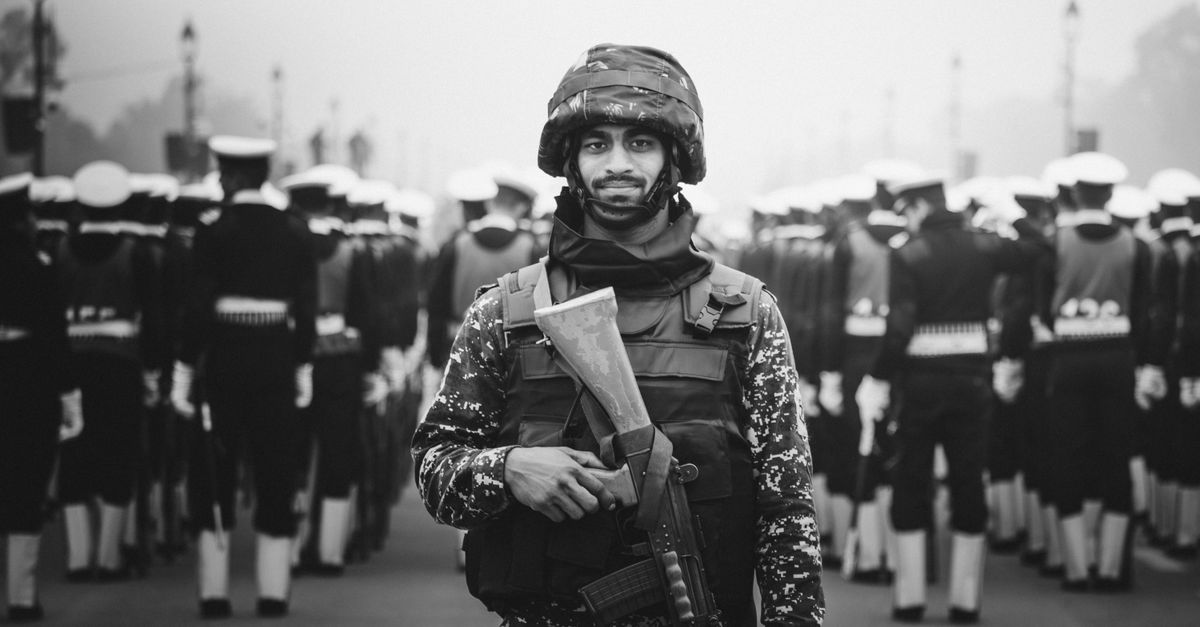
If you've ever searched for is Indian army stronger than pakistan faq, you're not alone. It's one of the most debated military topics in South Asia. The short answer: yes, India has a significant conventional advantage—but that doesn't mean Pakistan is a pushover. The real picture is more nuanced, shaped by numbers, technology, terrain, and the nuclear shadow that hangs over both nations. Below, we answer the most common questions in plain English, without the hype.
How Do the Two Armies Compare in Raw Numbers?
India's active military personnel sit around 1.45 million, while Pakistan's active force is roughly 650,000. That's more than double. India also has a larger reserve pool and a bigger paramilitary structure. In terms of main battle tanks, India fields around 4,000 (including T-90s and Arjun), whereas Pakistan operates about 2,500 (Al-Khalid and T-80UD). Artillery pieces? India has roughly 9,000 versus Pakistan's 4,500. So on paper, India's conventional edge is clear.
But numbers alone don't win wars. Pakistan compensates with shorter supply lines, concentrated forces near the border, and a doctrine that emphasizes rapid offensive action. India, meanwhile, has to guard a much longer border with China as well, which stretches its resources.
What About Air Power and Naval Strength?
India's air force operates around 2,200 aircraft, including 4th-gen fighters like the Su-30MKI and Rafale. Pakistan has about 1,400 aircraft, with F-16s and JF-17s as its backbone. India also has a distinct advantage in force multipliers—AWACS, mid-air refuelers, and a growing drone fleet.
At sea, the gap is even wider. India has two aircraft carriers (one operational, one in trials), 15 submarines, and a blue-water navy. Pakistan has no carriers and about 8 submarines, though it's adding Chinese-built Yuan-class boats. For a land-focused rivalry, naval power matters less, but it gives India options for blockade or power projection.
Does Money and Logistics Decide the Outcome?
India's defense budget in 2024 was roughly $84 billion. Pakistan's was about $7.5 billion. That's a 10:1 ratio. India can afford more modern equipment, better training, and domestic production (though it still imports a lot). Pakistan relies heavily on China and, historically, the US for hardware.
But money isn't everything. Pakistan's military has a reputation for frugality and innovation—think improvised armored vehicles and cost-effective missile systems. Also, Pakistan's logistics are simpler because its forces are concentrated in Punjab and Sindh, close to the Indian border. India's forces are spread from Kashmir to the northeast, and its supply lines can be vulnerable in a prolonged conflict.
The Nuclear Factor: Why Full-Scale War Is Unlikely
Both countries have nuclear weapons. India's arsenal is estimated at 160 warheads; Pakistan's at 170. Both have missile delivery systems, and Pakistan has a declared policy of 'full-spectrum deterrence,' including tactical nuclear weapons. This means any large-scale conventional push by India risks crossing Pakistan's nuclear threshold.
That's why the question 'is Indian army stronger than Pakistan faq' often comes with a caveat: India is stronger conventionally, but nuclear parity prevents a decisive war. Conflicts tend to be limited—like the 2019 Balakot airstrikes or border skirmishes. The threat of escalation keeps both sides in check.
Training, Morale, and Combat Experience
Both armies are battle-hardened. India has extensive counterinsurgency experience in Kashmir and the northeast, plus UN peacekeeping missions. Pakistan has fought major counterterrorism campaigns in Waziristan and has a strong artillery tradition.
Training standards are high in both. India's military academies are rigorous, and it conducts large-scale exercises like 'Tropic Thunder.' Pakistan's forces train with Chinese and Turkish counterparts. Morale is subjective, but neither side lacks confidence. In fact, Pakistani soldiers often believe they can offset India's size with superior maneuver and grit—a view that's part of the national narrative.
So, Is the Indian Army Stronger? The Bottom Line
Conventionally, yes—India has more troops, tanks, aircraft, ships, and money. It can sustain a longer fight and has greater strategic depth. But 'stronger' doesn't mean 'invincible.' Pakistan's military is no pushover; it's well-trained, battle-tested, and backed by nuclear weapons. In any scenario short of all-out war, India's advantage is real but not decisive. The two armies are built for different missions: India aims for regional dominance and two-front readiness; Pakistan aims to defend its territory and inflict unacceptable costs on any invader.
So when you search for is Indian army stronger than pakistan faq, remember: the answer is yes in most conventional metrics, but the full picture includes nuclear deterrence, terrain, and political will. That's why the subcontinent has seen limited wars, not total ones.
Frequently asked questions
Which country has more soldiers, India or Pakistan?
India has about 1.45 million active personnel, while Pakistan has around 650,000. India also has a larger reserve force.
Does India have better tanks than Pakistan?
India operates more tanks (around 4,000 vs 2,500) and has advanced models like the T-90 and Arjun. Pakistan's Al-Khalid and T-80UD are capable but fewer in number.
Why doesn't India use its conventional advantage in a full war?
Because Pakistan has nuclear weapons. Any major Indian offensive risks triggering a nuclear response, so conflicts remain limited.
Who has a stronger air force?
India has a larger and more modern air force, with about 2,200 aircraft compared to Pakistan's 1,400. India also has better force multipliers like AWACS and refuelers.
Is Pakistan's army more battle-hardened?
Both have combat experience. Pakistan has fought intense counterinsurgency campaigns, while India has extensive experience in Kashmir and UN missions. It's hard to quantify 'more' battle-hardened.
What role does China play in this comparison?
China is Pakistan's key ally and arms supplier. It provides military technology and diplomatic support, which helps Pakistan offset India's numerical superiority.