SSG vs MARCOS: Which Elite Commando Unit Is Best?
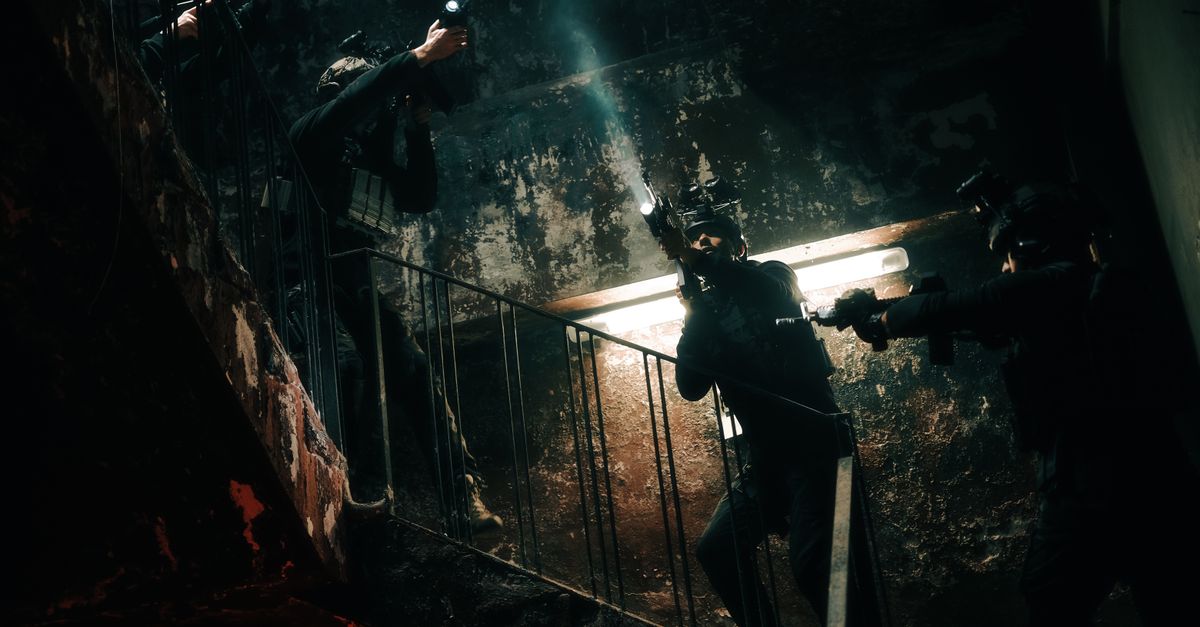
When people ask about special forces Pakistan vs India, the conversation often starts with two names: Pakistan's SSG and India's MARCOS. Both are elite, both are feared, but they are built for different jobs. The SSG (Special Service Group) is the Pakistan Army's premier commando unit, while MARCOS (Marine Commandos) is the Indian Navy's specialized maritime special operations force. If you're looking for a simple answer, here it is: there is no overall "best" unit—it depends on the mission. SSG excels in land-based unconventional warfare and high-altitude operations, while MARCOS dominates maritime counter-terrorism, underwater demolition, and coastal raids. This article breaks down their history, selection, training, equipment, and real operations to give you a clear picture of how they stack up.
Origins and Roles
The SSG was raised in 1956 with help from U.S. Army Special Forces, and it's often called the "Black Storks" due to their distinctive headgear. It falls under the Pakistan Army's Special Operations Command and has three main battalions plus a special operations school. Its primary roles include unconventional warfare, counter-terrorism, hostage rescue, and foreign internal defense.
MARCOS, short for Marine Commandos, was formed in 1987 as the Indian Navy's special operations unit. They are trained for maritime operations: sea-to-land strikes, underwater demolition, ship boarding, and counter-piracy. They also conduct riverine and jungle warfare. Unlike the SSG, which is army-centric, MARCOS operates across all three domains but with a strong naval focus.
The key difference: SSG is a general-purpose special force with a land warfare bias, while MARCOS is a maritime specialist. When comparing special forces Pakistan vs India, this distinction matters more than raw firepower.
Selection and Training: Who Goes Through More?
Both units have brutal selection processes, but they emphasize different skills.
SSG selection lasts about 9 months, starting with physical conditioning, then weapons training, mountain warfare, and survival. The dropout rate is around 80%. Famous phases include the "Killer Hill" and a 36-hour continuous exercise called "Chur" that tests endurance to the limit. Trainees also learn explosives, communications, and medical skills. After selection, they attend specialized courses like combat divers, HALO/HAHO, and sniper school.
MARCOS training is equally punishing, spanning 2 years. It begins with a 3-month basic course, followed by 9 months of advanced training. The infamous "Hell's Week" involves continuous physical and mental stress with almost no sleep. MARCOS must be proficient in combat swimming, diving, underwater demolition, and parachuting. They also train with the Indian Army's Para SF and foreign units like the US Navy SEALs.
Which is tougher? It's a toss-up. SSG focuses on endurance in mountains and deserts; MARCOS on waterborne endurance and breath-hold diving. Both produce operators who can function under extreme pressure.
Equipment and Firepower
SSG uses a mix of Pakistani and foreign weapons: Steyr AUG assault rifles, HK G3, MP5 submachine guns, and Glock pistols. They have night vision goggles, thermal imaging, and specialized gear for high-altitude operations. For mobility, they rely on helicopters, APCs, and sometimes horses in mountainous terrain.
MARCOS are equipped with Tavor TAR-21, AK-103, and MP5 submachine guns. They use diving gear like closed-circuit rebreathers for covert underwater approach, and they have access to Indian Navy ships, submarines, and helicopters. Their communication gear is top-notch, often integrated with naval command.
In terms of heavy support, MARCOS can call on naval gunfire and air support more readily, while SSG often operates with army aviation. Both units have access to sniper rifles and anti-tank weapons. The edge in maritime gear clearly goes to MARCOS; SSG leads in mountain and desert-specific equipment.
Notable Operations
SSG's most famous operation is the 1980 rescue of hostages at the Pakistan Embassy in Kabul, though details are scarce. More recently, SSG has been active in counter-terrorism operations in the tribal areas, including the 2009 attack on the Sri Lankan cricket team and the 2014 Army Public School attack in Peshawar. They also saw action in the 1999 Kargil conflict.
MARCOS gained fame during the 2008 Mumbai attacks, where they were deployed to flush out terrorists from the Taj Mahal Hotel and Nariman House. Their swift, methodical approach saved many lives. They have also been involved in counter-piracy operations off Somalia and in the 1999 Kargil War, where they conducted high-altitude raids.
Both units have proven themselves in real combat. However, MARCOS has more documented maritime successes, while SSG's record is more land-based. When people argue about special forces Pakistan vs India, these operations are often cited as evidence.
Which One Is Better? A Mission-Based Answer
If the mission is a hostage rescue in a building, both are equally capable. If it's a covert beach landing or ship assault, MARCOS is the clear choice. If it's a high-altitude raid in the Himalayas or a long-range patrol in Waziristan, SSG is better suited. The truth is that comparing them directly is like comparing a hammer to a wrench—both are essential tools, but for different jobs.
That said, MARCOS has a slight edge in joint operations due to India's larger naval infrastructure and frequent exercises with the US, Japan, and other navies. SSG, on the other hand, has more experience in sustained counter-insurgency warfare. Ultimately, the "best" unit depends on the scenario, and both are among the world's most capable special forces.
Frequently asked questions
Which is older: SSG or MARCOS?
SSG was formed in 1956, while MARCOS was established in 1987. So SSG has a longer history.
How many personnel are in each unit?
Exact numbers are classified, but SSG is estimated to have around 5,000–7,000 operators, while MARCOS is smaller, with roughly 2,000–3,000 commandos.
Have SSG and MARCOS ever faced each other in combat?
There is no public record of direct combat between the two units. They have operated in overlapping conflict zones like Kargil, but not in direct engagement.
Which unit has better sniper training?
Both have excellent sniper programs. SSG snipers are trained for long-range mountain shots, while MARCOS snipers focus on maritime and urban environments. It's hard to declare one superior.
Can MARCOS operate in mountains?
Yes, MARCOS receive some mountain warfare training, but they are not as specialized as SSG in high-altitude operations.